
AI workflows
−30%
I cut requirements overhead per sprint by around 30% with AI-assisted PRDs, epics and user stories. That is a figure from my own practice.

Ten years of product ownership in enterprise software, with a background as developer and software architect. I combine technical depth with clear product leadership.
Two products of my own show how I work: OptiSolar, a home-energy platform in daily use, and Ops Control Center, a concept for ITIL operations.
I work with product teams and with stakeholders at every level. I start by understanding the problem.
PRDs, epic decomposition and user stories with Claude and Atlassian Intelligence, plus prototypes and working products with Claude Code. The Product Owner stays accountable.
Vision, roadmap, OKRs, personas and MVP. From the first idea to the production release.
From waterfall to Agile with Scrum, Kanban and, where it fits, SAFe, across software, hardware and firmware teams. I help set up engineering governance: Definition of Ready and Definition of Done. I mentor engineers toward a product mindset.
I designed and prioritised both myself and built them with AI as a tool. Each has a case study, a showreel and a presentation.
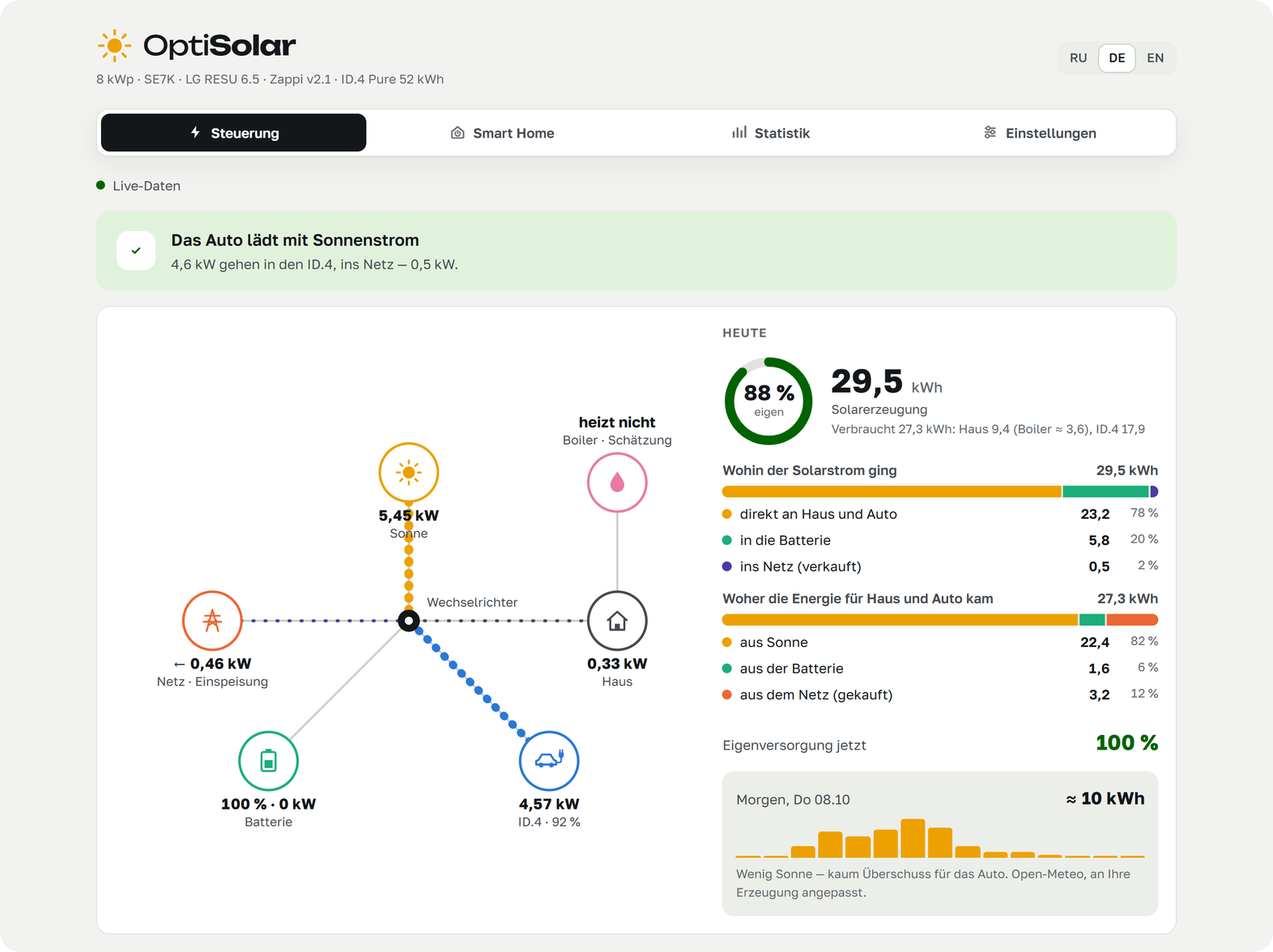
One platform for solar power, EV and smart home: a live energy flow instead of five apps. Conceived as Product Owner, version 1 built with Claude Code in 10 days.
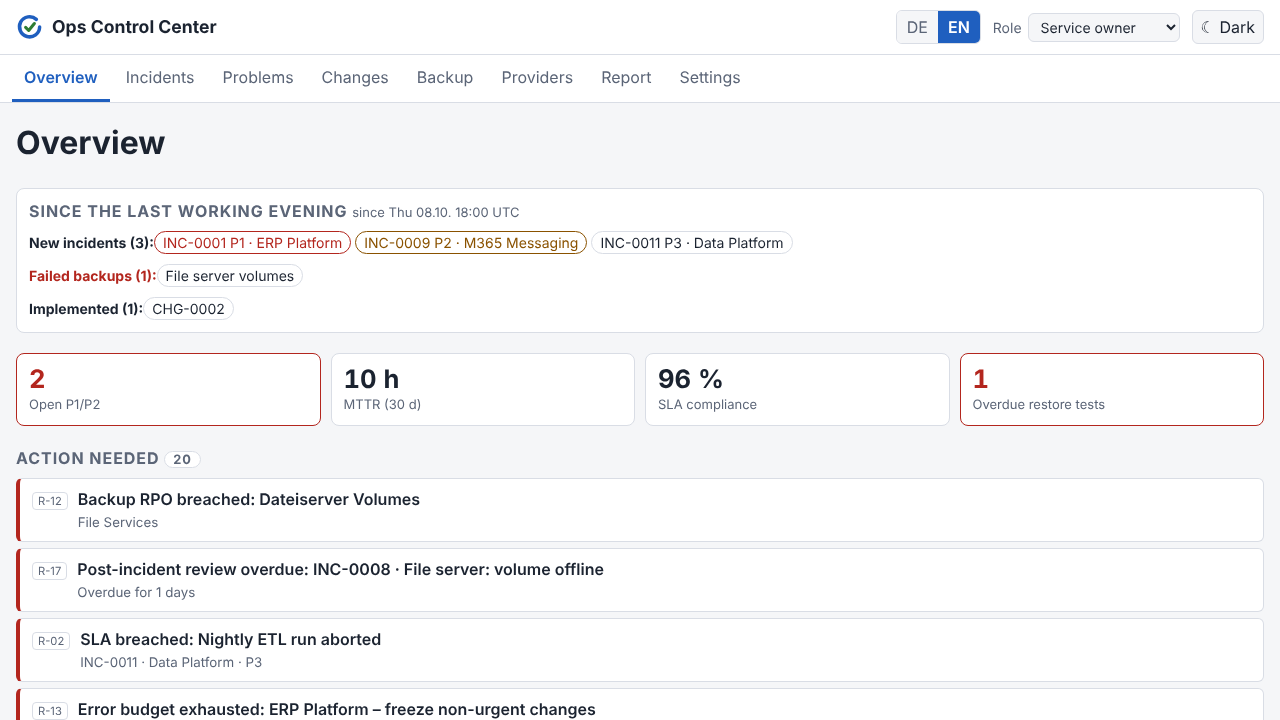
One working surface for ITIL operations: incident, problem, change, backup and provider. The product is 22 traceable rules that turn data into what needs action today.
Close to product teams and stakeholders at every level, from engineering to management.
Introducing AI into product work: PRDs, epic decomposition, agentic workflows, up to prototypes and working products. I use it daily myself, and OptiSolar is the proof.
From waterfall to Agile: Scrum, Kanban and, where it fits, SAFe with PI planning. I help set up engineering governance with a clear Definition of Ready and Definition of Done, and transparent metrics.
Vision, roadmap, OKRs, discovery and prioritisation, from the first idea to the production release.
Working side by side with product teams, engineering, UX, QA and operations, and aligning stakeholders of every kind.
Four steps. You always know what we are working on and why.
I talk to users, customers and stakeholders: interviews, personas and journey maps. The goal is the problem that is really worth solving.
Prototype or MVP: test early instead of planning for long, so assumptions can be checked before development starts.
ICE by impact and effort, and a roadmap with clear milestones and owners.
Close to the team: sprint reviews, a clear Definition of Done, open metrics. In the end documentation and mentoring, so the team carries on without me.
Results from my practice in enterprise software. What it means for you depends on where you start.
I cut requirements overhead per sprint by around 30% with AI-assisted PRDs, epics and user stories. That is a figure from my own practice.
On an enterprise platform I shortened time-to-market by around 50% with a redesigned requirements intake and ICE prioritisation.
Fewer defects in the backlog, thanks to clear acceptance criteria, a Definition of Done and feedback in every sprint.
I like it when things are clear: what we build, why, and when it is done. AI helps me get there faster, and I stay responsible for the decisions.
A short message is enough, in German or English. Tell me what you are working on.